

A new report conducted by The Last Beach Clean Up and Beyond Plastics has revealed that the US’ recycling rate for post-consumer plastic waste fell to five to six per cent in 2021. Research also found that, while plastics recycling is on the decline, the per capita generation of plastic waste has increased by 263 per cent since 1980.
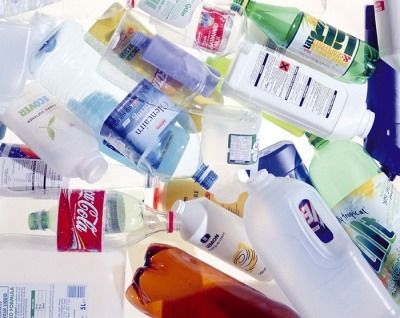
Titled ‘The Real Truth About the U.S. Plastics Recycling Rate’, the report notes that the other 94 per cent of plastic waste, material that may have been used “for mere minutes”, is disposed of in landfills, burned in incinerators, or ends up polluting the ocean, waterways, and landscapes.
The Last Beach Clean Up and Beyond Plastics highlight the “wasteful” nature of the plastic recycling process – where 30 per cent of collected PET bottle plastic material is disposed of.
Findings in the report on the “failure” of plastic recycling in the US contrast that of paper recycling, which has a rate of 66 per cent. ‘The Real Truth About the U.S. Plastics Recycling Rate’ asserts that the high recycling rates of post-consumer paper, cardboard, and metals proves that recycling works to ‘reclaim valuable natural material resources’. In comparison, plastic recycling has “never reached 10 per cent, even when millions of tons of plastic waste per year were labelled as recycled when exported to China”.
In the past, the U.S. Environmental Protection Agency (EPA) released its yearly data on recycling rates on 15 November, National Recycling Day. However, the EPA has not released updated recycling rates since November of 2020, when it published the rates for 2018. The report sought to “fill this gap” by examining data from the National Academies of Science, Engineering, and Medicine, the latest U.S. exports, and the waste industry.
Examples of public policies that have successfully reduced plastic waste and pollution are also shared in the report – including plastic bag bans, plastic bottled water bans coupled with water filling stations, and reuse systems. It is hoped that these will become more widely adopted.
Plastic waste exports
Conversations regarding the effectiveness of plastic recycling in the US and the falling rates of the process are linked in the report to other countries that have banned waste exports, highlighting proof that bans and fees work to reduce plastic waste and pollution around the world.
In May of last year, the Turkish Ministry of Trade announced that most plastic waste imports into Turkey would be banned from 2 July 2021. The announcement followed a Greenpeace investigation that revealed that plastic waste was being sent from the UK to Turkey for recycling, yet was actually being illegally dumped and burned in areas of Southern Turkey.
This followed news earlier in the year that the European Commision intended to ban non-recyclable plastic waste exports to non-OECD (Organisation for Economic Co-operation and Development) countries.
In July 2020, the Chinese Government revealed its plan to ban all imports of solid waste from 2021. The ban was set in line with policies that were applied since 2017 to crackdown on the import of foreign waste.
“Advanced recycling”
Last week, the California Attorney General Rob Bonta made public plans to investigate recycling claims made by the petrochemical and fossil fuel industries, and their involvement in plastic pollution. This began with issuing a subpoena to fossil fuel giant ExxonMobil, to establish whether it has lied to the public about the efficacy of plastics recycling and the negative effects of plastics. ExxonMobil responded that they are committed to “advanced recycling” technology.
The Last Beach Clean Up and Beyond Plastics have announced that they reject “advanced recycling”, describing the process as “the latest false solution being peddled by the plastics industry”, which “is neither viable nor environmentally sound”.
Speaking on this recycling technique, Jan Dell, Independent Engineer and Founder of The Last Beach Cleanup, said: “Chemical recycling doesn’t work on mixed household plastic waste and it doesn’t reduce plastic pollution.”
She added: “There is no circular economy of plastics. Plastics and products companies co-opted the success of other material recycling and America’s desire to recycle to create the myth that plastic is recyclable.”
Judith Enck, President of Beyond Plastics and former U.S. E.P.A. Regional Administrator, also said: “The plastics industry must stop lying to the public about plastics recycling. It does not work, it never will work, and no amount of false advertising will change that. Instead, we need consumer brand companies and governments to adopt policies that reduce the production, usage, and disposal of plastics.
“We call on the U.S. EPA to publicly release these important numbers as soon as possible. Elected officials and the public need this data in order to make informed decisions about the plastic pollution crisis we’re all facing.”


Get our weekly digest
resource.co article ai

How will the government and DMOs address the challenges of including glass in DRS while ensuring a level playing field across the UK?
There's no easy solution to include glass in the DRS while maintaining a level playing field. Potential approaches include a phased introduction of glass, potentially with higher deposits to reflect its logistical challenges. The government and DMOs could incentivise innovation in glass packaging design and subsidise dedicated return points for glass-handling. Exemptions for smaller businesses unable to handle glass might also be necessary. Any successful solution will likely blend several approaches. It must address the differing priorities of devolved administrations, balance environmental benefits with logistical and cost implications, and be supported by robust consumer education campaigns emphasizing the importance of glass recycling.