

Initiative targets the sorting and pre-processing bottleneck that has left European recyclers relying on post-industrial waste rather than garments collected from households.
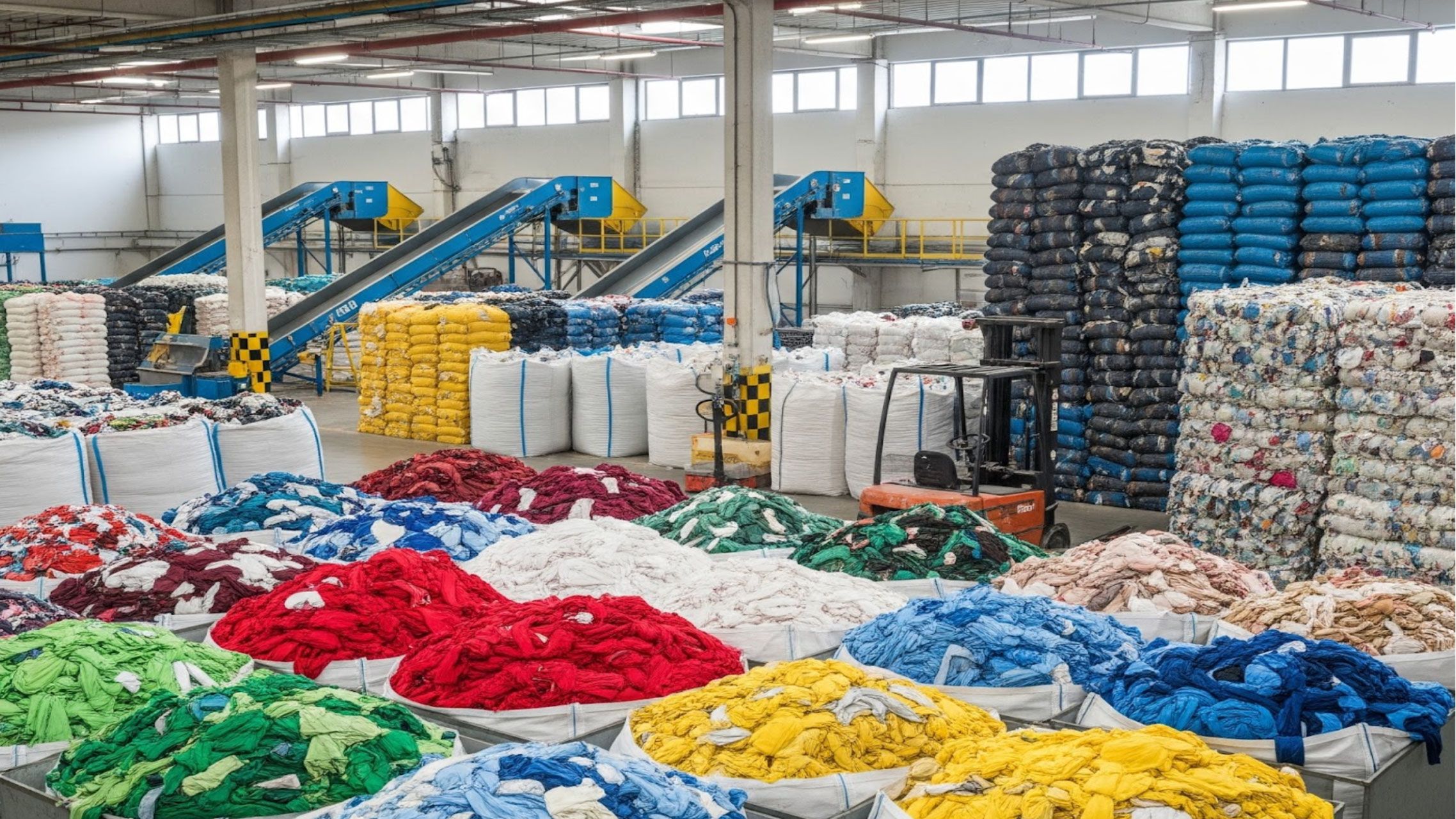
Fashion for Good has launched a project to build the sorting and pre-processing infrastructure that European textile recyclers say they need before they can absorb significant volumes of post-consumer waste. Project FAE (Feedstock Activation Europe), announced in Amsterdam yesterday (9 April), brings together adidas as lead sponsor with BESTSELLER and Inditex as brand partners.
The project has two strands. The first will assess the technical and commercial feasibility of advanced pre-processing techniques, including fibre blend separation, elastane removal and contaminant extraction. The second will develop a framework for regional hubs that aggregate post-consumer textile volumes, apply automated sorting, and produce feedstock streams tailored to the specifications of individual recyclers.
The bottleneck is economic as much as technical. Post-consumer textiles are heterogeneous and costly to process, and recyclers apply stringent specifications that often differ between technologies. Sorters struggle to cover the cost of preparing material at the price recyclers are willing to pay, and most European recyclers currently rely on cleaner, more uniform post-industrial waste as a result.
"We have been talking about textile circularity for years, and the honest truth is that the technology is no longer the bottleneck. What is holding us back is much more unglamorous: the sorting lines, the pre-processing steps, the supply systems that need to exist before a single fibre can be recycled," said Katrin Ley, Managing Director at Fashion for Good.
The feedstock opportunity has been quantified before. Fashion for Good's earlier Sorting for Circularity Europe project, published in 2022, analysed 21 tonnes of post-consumer garments from Belgium, Germany, the Netherlands, Poland, Spain and the UK, and found that 74 per cent of low-value post-consumer textiles across those markets, around 494,000 tonnes a year, were suitable for fibre-to-fibre recycling. The report valued that material at €74 million annually if it could be reintroduced into the textile supply chain.
EU textile EPR schemes must be operational by April 2028, and brands paying into them have a direct interest in seeing sorting infrastructure in place by then. New recycling capacity has begun to come online across Europe, but without feedstock at acceptable cost and quality plants will rely on post-industrial waste. The UK has no equivalent deadline driving investment - talk of textile EPR has yet to materialise as policy, and domestic collection infrastructure has been contracting rather than expanding.
Project FAE draws on advisory input from sorters and recyclers across Europe, spanning mechanical, thermomechanical and chemical technologies. Named partners include chemical recyclers Circ, Infinited Fiber Company and Reju, alongside sorters such as Boer Group, Sympany and Texaid. Rehubs is the project's strategic partner, with Rematters providing on-ground support, and ecosystem partners include WRAP (the Waste and Resources Action Programme), Refashion, Reverse Resources and Global Fashion Agenda.
Fashion for Good says the two workstreams are intended to produce a practical and commercial framework the wider industry can act on, with implementation of regional sorting and pre-processing hubs anticipated in the coming years as part of broader efforts to build a post-consumer textile value chain in Europe.


Get our weekly digest
resource.co article ai

How will the government and DMOs address the challenges of including glass in DRS while ensuring a level playing field across the UK?
There's no easy solution to include glass in the DRS while maintaining a level playing field. Potential approaches include a phased introduction of glass, potentially with higher deposits to reflect its logistical challenges. The government and DMOs could incentivise innovation in glass packaging design and subsidise dedicated return points for glass-handling. Exemptions for smaller businesses unable to handle glass might also be necessary. Any successful solution will likely blend several approaches. It must address the differing priorities of devolved administrations, balance environmental benefits with logistical and cost implications, and be supported by robust consumer education campaigns emphasizing the importance of glass recycling.