

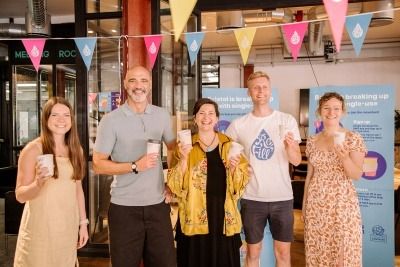
This World Refill Day (16 June) marks the launch of City to Sea’s ‘Refill Return Cup’ scheme. The returnable cup scheme allows Bristol residents to borrow reusable cups to then be returned for free to any participating shops across the city.

The scheme is funded by Bristol-based Ecosurety through its Exploration Fund.
The launch is accompanied by the release of a report that found that over half of respondents (53 per cent) said they were more likely to buy from a brand that offered products in prefilled returnable packaging.
The cups used in the scheme are produced by Cornish company Circular & Co and are made from polypropylene which can be reused 500 times, washed easily and recycled multiple times before being recycled at end-of-life. They also have a low breakeven point, meaning they have a lower CO2 emission after just two uses.
There are currently 11 participating coffee shops in Bristol city centre and surrounding areas and the scheme has the capacity for up to 30 shops to join.
To borrow a cup, residents are required to download City to Sea’s ‘Refill App’ which will allow for the generation of a QR code for the barista to scan. The cup and app are free to use and no deposit is taken. Up to four cups can be rented at one time. The app gives participants 14 days to return the reusable cups.
In August City to Sea will introduce a late return charge of around £3 for unreturned or broken cups so these cups can be replaced. Cups can be returned in ‘return boxes’ in participating coffee shops or handed to the baristas.
Refill as a solution for excess waste
Currently, more than 2.5 billion takeaway coffee cups are used and thrown away each year in the UK. City to Sea estimates that if the Bristol Refill Return Cup was used by just one in ten residents just once a week then 46,000 single-use cups would be saved across the city every week – amounting to 2.5 million single-use coffee cups a year.
Statistics also show that less than one per cent of single-use cups are recycled, while City to Sea says that biodegradable substitutes have led to customer confusion and contamination of recycling systems.
Gareth Morton, Discovery Manager at Ecosurety commented: “Ecosurety is very proud to support this innovative refill initiative here in Bristol - our home city. Reducing single-use items such as coffee cups is a simple but effective step to reducing resource consumption, waste, and carbon emissions. We are excited to see how this initiative will encourage students to embed a sustainable way to consume their hot drinks on the go.”
World Refill Day is a global day of action to prevent plastic pollution and help people live with less waste. The campaign is designed to create an alternative vison of the future and accelerate the transition away from single-use plastic and towards refill & reuse systems.


Get our weekly digest
resource.co article ai

How will the government and DMOs address the challenges of including glass in DRS while ensuring a level playing field across the UK?
There's no easy solution to include glass in the DRS while maintaining a level playing field. Potential approaches include a phased introduction of glass, potentially with higher deposits to reflect its logistical challenges. The government and DMOs could incentivise innovation in glass packaging design and subsidise dedicated return points for glass-handling. Exemptions for smaller businesses unable to handle glass might also be necessary. Any successful solution will likely blend several approaches. It must address the differing priorities of devolved administrations, balance environmental benefits with logistical and cost implications, and be supported by robust consumer education campaigns emphasizing the importance of glass recycling.