

West Dunbartonshire council has approved plans for a £20 million facility, designed to turn plastic waste into hydrogen. The facility will be the second of its kind in the UK.
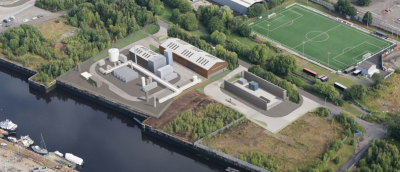
The plans were presented by Peel NRE – part of real estate business Peel L and P – for the site at Rothesay Dock on the north bank of the River Clyde, Scotland.
According to Peel NRE, the ‘13,500 tonne facility’ will use Powerhouse Energy Plc’s (AIM: PHE) technology with the target of creating a ‘local source of sustainable hydrogen from non-recyclable plastics’ which would otherwise be sent to landfill, incineration or export overseas.
The business stated that the hydrogen produced through the facility will be used as a clean fuel for HGVs, buses and cars, and announced further plans for a linked hydrogen refuelling station on-site.
The facility proposal follows government announcements to double hydrogen production targets by 2030, as part of the Energy Security Strategy. The strategy aims to produce ‘clean and affordable energy in Britain as energy prices continue to rise globally’.
The first facility of this kind is to be delivered at Peel NRE’s Protos site in Cheshire near Ellesmere Port – due to begin construction this year. The construction for the West Dunbartonshire facility is expected to take ‘around 15 months to complete’.
Estimates by Zero Waste Scotland reveal that around 500,000 tonnes of waste plastic are produced in Scotland every year, with research undertaken by Anthesis, on behalf of Peel NRE, showing that around 300,000 tonnes are within ‘the central belt of Scotland’.
Peel NRE has signed a collaboration agreement with Powerhouse Energy Group to develop 11 waste plastic to hydrogen facilities across the UK over the next few years.
Richard Barker, Development Director at Peel NRE, said: “This is a fantastic moment for West Dunbartonshire and the surrounding area. It shows how the UK is innovating when it comes to rolling out new net zero technologies. The facility will address the dual challenge of both tackling our problem plastic whilst creating hydrogen, a sustainable fuel for future generations.
“Whilst the focus must remain on removing plastic from society, there are still end of life plastics that need managing. The £20m plant will play a pivotal role in making the best use of non-recyclable material, with the resulting hydrogen able to help cut carbon emissions from vehicles.”
Paul Drennan-Durose, Chief Executive Officer of Powerhouse Energy Group, added: “The consent is another key landmark for the rollout of our pioneering technology in the UK, creating a local source of hydrogen production and a vehicle refuelling station. It’ll help deliver a low carbon alternative to diesel vehicles, responding to both Scottish and UK Government missions to decarbonise our communities and economy.
“This is the second in a planned portfolio of such recycling facilities across the UK we’re currently exploring with Peel NRE. It demonstrates our commitment to tackling the greatest challenges of our time – tackling climate change and addressing our waste plastic - with innovative technologies.”


Get our weekly digest
resource.co article ai

How will the government and DMOs address the challenges of including glass in DRS while ensuring a level playing field across the UK?
There's no easy solution to include glass in the DRS while maintaining a level playing field. Potential approaches include a phased introduction of glass, potentially with higher deposits to reflect its logistical challenges. The government and DMOs could incentivise innovation in glass packaging design and subsidise dedicated return points for glass-handling. Exemptions for smaller businesses unable to handle glass might also be necessary. Any successful solution will likely blend several approaches. It must address the differing priorities of devolved administrations, balance environmental benefits with logistical and cost implications, and be supported by robust consumer education campaigns emphasizing the importance of glass recycling.